


It’s a fair question, and one that a lot of Virginia homeowners ask after being disappointed by a product that promised to solve their gutter problems and didn’t. The gutter guard market is full of options at every price point, and many of them genuinely don’t deliver. But writing off the entire category based on one bad experience is a bit like judging all products by the one that didn’t work out.
Many gutter guards don’t work well, while others work very well. Understanding the difference is what separates homeowners who spend money twice from those who solve the problem once and never think about it again.
Why So Many Gutter Guards Disappoint
- Foam inserts sit inside the gutter and are supposed to let water through while blocking debris. In practice, debris sits on top of the foam, decomposes, and eventually the foam becomes a growing medium for moss and small plants. They’re inexpensive for a reason.
- Plastic screen covers are the classic big-box solution. They snap over the top of existing gutters but have holes large enough to let smaller debris through. Shingle grit gets into them, debris accumulates over time, and they often get dislodged by wind or ice. They’re marginally better than nothing in a yard with minimal tree cover.
- Fine micro-mesh systems are more sophisticated and perform better than screens in most conditions. However, many require periodic cleaning because surface tension causes fine debris and pollen to build up on the mesh surface and eventually impede water flow, which means you’re back on a ladder, just less often.
- Reverse-curve systems use the principle of water adhesion where water follows the curve into the gutter while debris falls off the edge. The concept is sound, but cheap versions of this design allow debris to cling to the curve and build up over time, and light rainfall can sometimes miss the gutter opening entirely if the geometry isn’t right.
What Actually Makes a Gutter Guard Work
The systems that genuinely deliver on their promises share a few key features. They’re built from robust materials that hold their shape across decades of weather rather than lightweight plastic that warps under heat and fails under ice load. They’re part of a purpose-built system where the guard and the gutter are engineered to work together, not a cover placed on top of whatever was already there. They have enough water capacity to handle real downpours, not just average rain. And they’re backed by a warranty that the manufacturer is actually willing to stand behind.
What Makes the K-Guard System Different
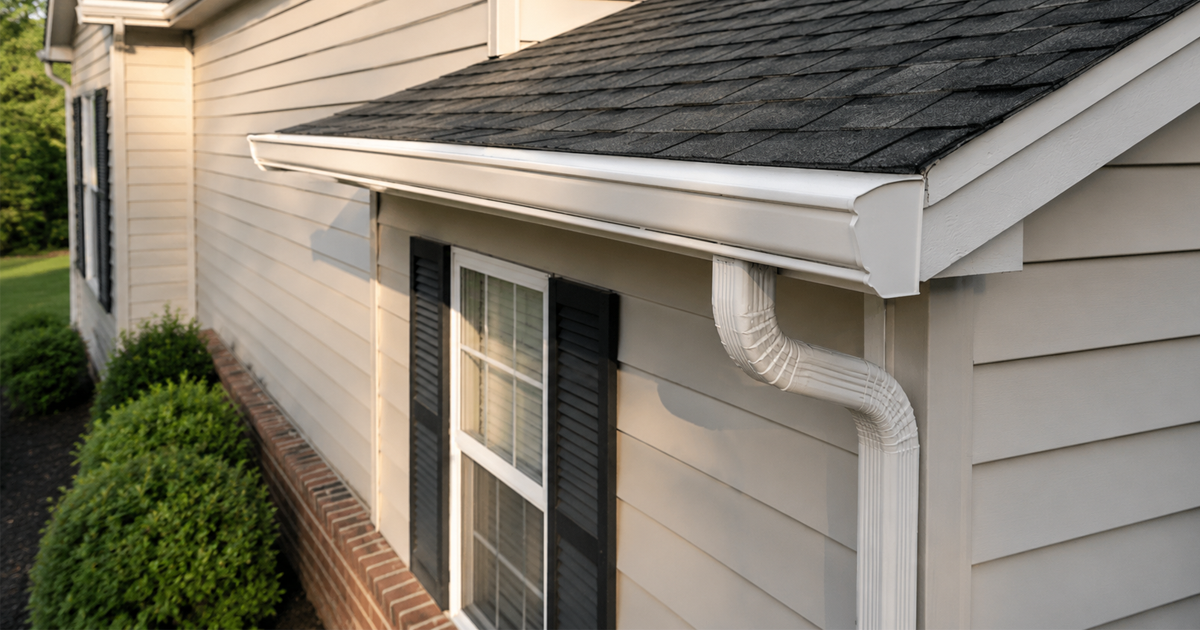
The K-Guard system isn’t just a cover added to your gutters. It’s a complete system where the hood, gutter, hangers, and downspouts are all built to work together. The design allows water to flow smoothly into the gutter while leaves and debris fall off the edge, which helps prevent clogs without constant maintenance.
The system is also built to handle heavy rain more effectively than traditional gutters, thanks to its larger size and higher water capacity. Durable materials and strong internal supports help keep everything secure and performing well over time.
It’s backed by a lifetime no-clog warranty, which reflects how the system is designed to reduce maintenance and protect your home long term.
Wondering If K-Guard Is Right for Your Home?
If you’re looking into K-Guard for your home, getting a clear sense of cost is a helpful place to start. Our online quote tool gives you an instant, no-obligation estimate based on your home. If you’d like a more accurate, personalized quote, you can also reach out and we’ll take a closer look.