


If you’ve ever looked at an older home or a cabin and noticed there were no gutters anywhere on the roofline, you might have wondered whether gutters actually matter or whether they’re just one of those things builders tack on by habit.
The answer is that gutters are one of the most important and most underappreciated systems on your home. When they’re working correctly, you barely notice them. When they’re missing or failing, the damage can be slow, expensive, and sometimes very serious.
What Gutters Actually Do
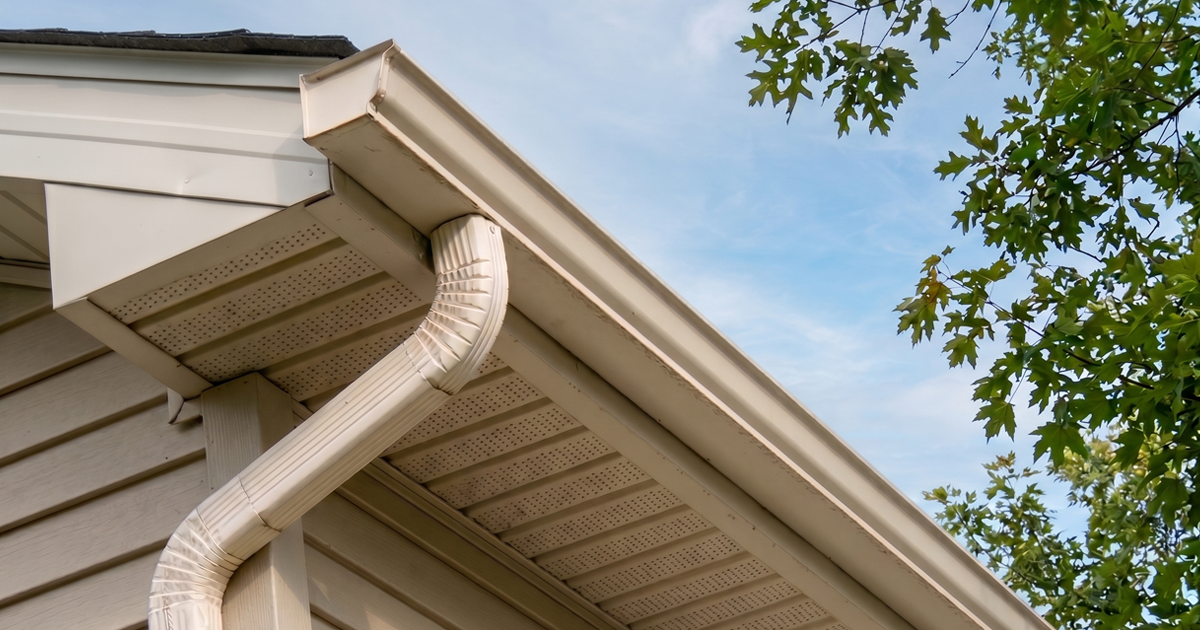
Gutters exist to control where rainwater goes after it hits your roof. A typical roof sheds an enormous amount of water during even a moderate rainstorm, and without a system to channel that water away, it falls in a curtain straight off your roofline and lands right next to your foundation. That matters because soil that gets saturated repeatedly begins to shift, and when soil shifts around your foundation, you get cracks, settling, and in serious cases, structural failure. Gutters direct water through downspouts and move it away from the home, usually several feet out from the foundation line.
What Happens to Homes Without Gutters
- Foundation erosion and cracking. Water that repeatedly pools and soaks into the ground next to your foundation creates hydrostatic pressure, and over years, that pressure causes cracks and instability that are extraordinarily expensive to repair.
- Basement and crawl space flooding. Moisture intrusion leads to mould, rot, and structural damage to floor joists and sill plates, even in homes where the problem isn’t immediately visible.
- Fascia and soffit rot. When water pours off a roofline without gutters, it runs directly down the fascia board, and wood fascia that gets saturated repeatedly rots surprisingly fast. Replacing it means scaffolding, carpentry, and paint, all of which add up quickly.
- Landscape destruction. The curtain of water pouring off an unguttered roofline can erode mulch beds, kill plants, and create trenches in your yard that require regrading.
- Siding damage. Splashback from water hitting the ground near the foundation can throw mud, debris, and moisture up against your siding, accelerating staining, warping, and rot over time.
- Pest problems. Stagnant water that pools near the foundation attracts mosquitoes, and damp wood invites carpenter ants and termites into your home’s structure.
For a deeper look, read our article: What’s Lurking in Your Gutters? Mold, Pests & Other Hidden Dangers.
Do All Homes Need Gutters?
Most homes benefit significantly from gutters. The exceptions tend to be homes in very arid climates where rainfall is minimal, or homes with very wide overhangs that naturally direct water far from the foundation. In Virginia, where rainfall is frequent and sometimes intense, gutters aren’t optional. They’re essential protection for your home.
Why Gutter Maintenance Matters as Much as Having Gutters
A gutter that’s clogged with leaves and debris is functionally similar to having no gutter at all. Water backs up, overflows over the front edge, and falls right next to your foundation, which is exactly what you were trying to prevent. This is why homeowners who have gutters but never clean them often end up with the same foundation and landscape problems as homes without gutters entirely. The real answer isn’t cleaning gutters more often but having a system that doesn’t clog in the first place.
Ready to Protect Your Home the Right Way?
Whether you need a full gutter system, a repair, or want to upgrade to something that works without constant maintenance, we’d love to help you find the right solution. Reach out to our team, and we’ll start with a free, no-obligation estimate.