


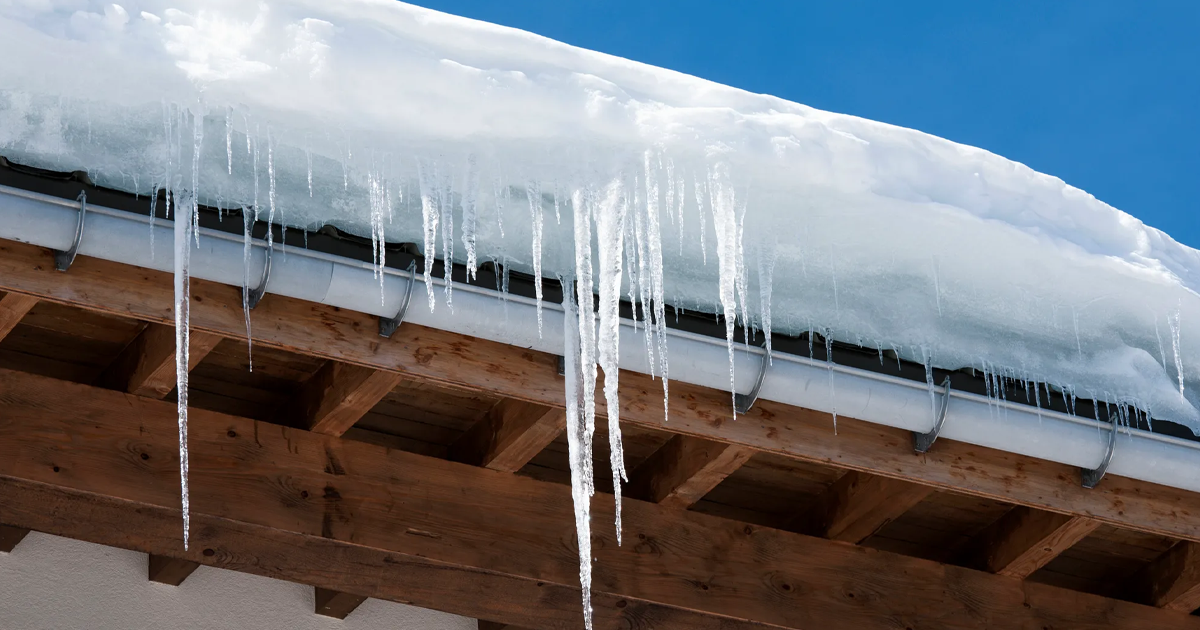
Most homeowners think winter gutter problems only happen in places with heavy snow. But in Richmond and Hampton Roads, winter brings a different kind of threat – one that’s quieter, slower, and often far more damaging. From freeze-thaw cycles to trapped moisture and coastal storms, winter is the season when gutters take the hardest hit even if the damage isn’t visible until months later. This is also why routine gutter maintenance or a simple seasonal inspection can make a big difference before small issues turn into major repairs.
Below is a closer look at the hidden winter damage cycle – and how choosing the right gutter system can prevent costly repairs in early spring.
1. The Freeze–Thaw Cycle: Small Cracks Become Big Problems
Even though Virginia doesn’t see deep, prolonged freezes, winter temperatures often bounce above and below freezing. This is exactly when gutters experience the most stress.
Here’s what happens:
- Water collects inside sagging or clogged gutters
- Overnight freezes cause that water to expand
- Expansion creates pressure on seams, joints, and aging gutter material
- When the ice melts, the weakened spots begin to separate or crack
By early spring, homeowners often find leaks, bowing, or full gutter detachment – all caused by winter stress that went unnoticed. A quick winter gutter inspection can often spot these early signs before they become major issues.
Why K-Guard or seamless gutters help: Seamless gutters eliminate traditional joints where cracking typically begins, while K-Guard’s enclosed design keeps debris out, reducing the amount of water that can freeze inside the system.
2. Trapped Moisture: Rot, Mold & Fascia Damage
Winter rains are frequent in both Richmond and Hampton Roads, and moisture tends to linger longer in cooler temperatures. When gutters can’t drain properly, water backs up and pools along the roofline.
This leads to:
- Softened or rotting fascia boards
- Mold forming under the eaves
- Water slipping under shingles
- Early deterioration of the roofline
By spring, homeowners may notice peeling paint, wood rot, or damp spots – all signs of winter moisture that sat in place for weeks or months. Regular maintenance or a seasonal inspection helps catch drainage issues early so they don’t escalate.
How upgraded gutters help: K-Guard and seamless systems promote reliable drainage, preventing water from collecting long enough to cause structural damage.
3. Extra Weight From Wet Leaves & Winter Debris
Virginia winters bring constant leaf fall, rain-soaked debris, and occasional storms – all of which can overload traditional open gutters.
Wet debris can weigh several pounds per foot, causing:
- Gutter sagging
- Pulling away from the home
- Early metal fatigue
- Warping and deformation
Even a slight sag can disrupt the entire drainage system. Homeowners who schedule seasonal maintenance or a simple gutter inspection usually catch these early warning signs before the damage worsens.
A better solution: K-Guard’s fully covered design prevents debris from entering at all, while seamless gutters reduce the number of weak points where sagging typically begins.
4. Cold-Weather Cracking: Metal Tension at Low Temperatures
As temperatures drop, metal and vinyl gutters contract. Older or lower-quality gutters may develop micro-cracks that expand throughout the winter, eventually becoming leaks when spring rains arrive. This issue affects traditional systems the most – especially those with many seams and patch repairs. A winter inspection can often identify weak spots or aging areas before cracking becomes noticeable.
Seamless gutters shine here: With fewer joints and no sections to pull apart during contraction, they handle temperature changes far more reliably.
5. Winter Storm Patterns in Coastal Virginia Are Changing
Both Richmond and Hampton Roads have seen more intense winter storms over the last decade. Heavy rainfall, strong winds, and sudden temperature drops add stress to gutter systems not designed for shifting weather conditions.
Traditional gutters struggle with:
- Sudden water surgesquote
- Wind-blown debris
- Overflow during fast, heavy rain
- Repeated exposure to moisture-laden coastal air
Homes in these regions benefit from durable systems built to handle unpredictable winter weather.
Winter may seem harmless in Virginia, but it’s one of the most damaging seasons for gutters. The combination of fluctuating temperatures, lingering moisture, wet debris, and storm activity creates a perfect environment for problems to develop unnoticed. Taking action now before spring inspections reveal costly issues is the best way to protect your home’s structure and avoid unexpected repairs.
Stay Ahead of Winter’s Silent Impact on Your Gutters
If you’re unsure how winter may have affected your gutters, a K-Guard system could be the long-term solution your home needs. You can also start with a gutter inspection, which helps identify hidden winter damage early. Get an instant K-Guard estimate, and our team will guide you through the next steps.